

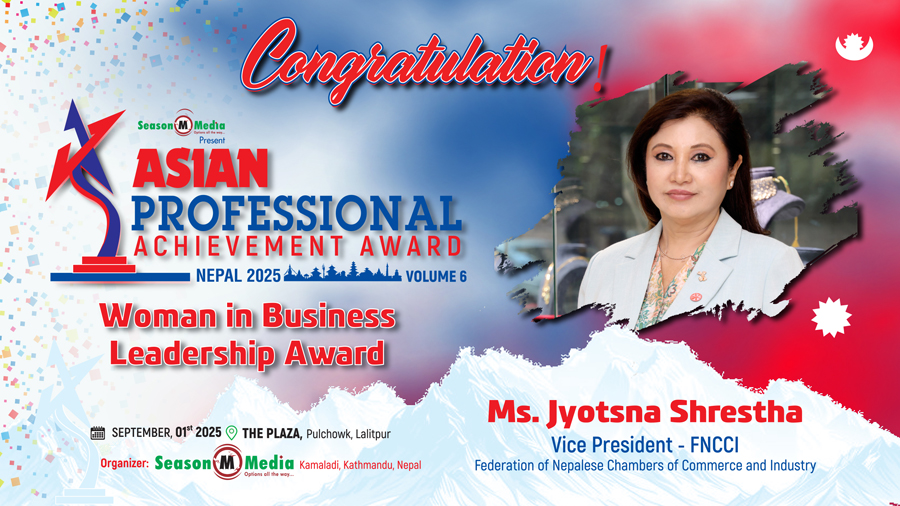
Vice President (Associate), FNCCI – Jyotsna Shrestha
Jyotsna Shrestha is a dynamic business leader and policy influencer, currently holding the position of Vice President (Associate) at the Federation of Nepalese Chambers of Commerce & Industry (FNCCI). In this influential role, she represents associate members within the organization’s executive committee and contributes actively to shaping strategic priorities and national economic policies. Her leadership is instrumental in driving initiatives that support private sector growth, labor reforms, and economic modernization.
She also serves as the Chairperson of the FNCCI Employers’ Council, where she leads dialogue between employers, labor representatives, and government stakeholders. Under her stewardship, the Council has played a crucial role in shaping labor-related policies, promoting constructive engagement on employment issues, and enhancing the overall industrial relations environment in Nepal.
Previously, Jyotsna broke new ground as the first woman elected President of the Nepal Gems and Jewellery Association in 2017. During her three-year tenure, she championed efforts to upgrade industry standards, promote exports, and strengthen Nepal’s competitive standing in the international gemstone and jewelry markets.
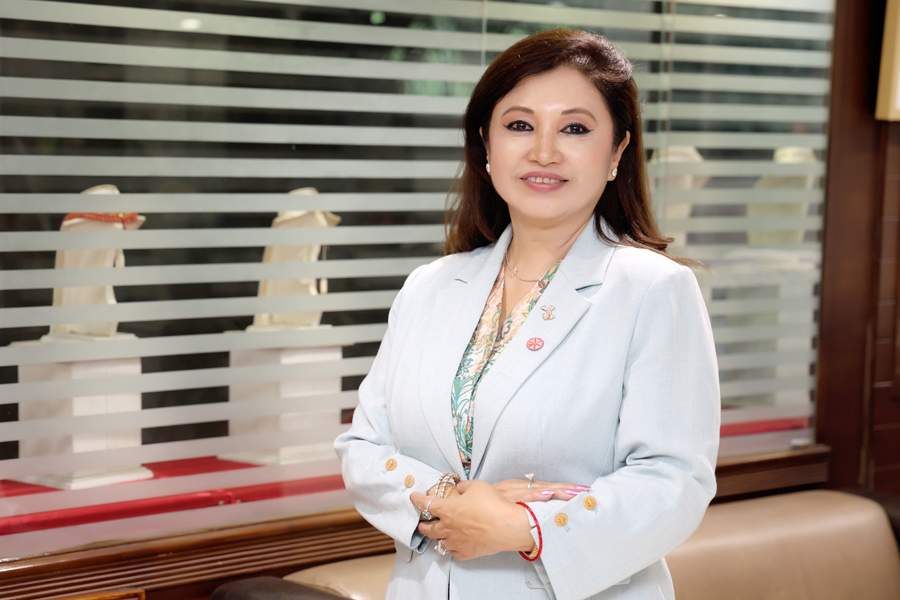
Jyotsna has been deeply engaged in policy advocacy across multiple domains. At an economic policy forum hosted by FEJA in February 2025, she called for swift legislative amendments to 29 outdated laws and advocated for the implementation of the Trade Policy 2081 to attract investment and narrow the country’s trade gap. Her commitment to improving industrial relations was further demonstrated in September 2024 when she pushed for the enforcement of a landmark employer–union agreement, emphasizing direct negotiation and consensus-building on key issues such as minimum wage and workforce efficiency.
In April 2024, Jyotsna was part of an FNCCI delegation that met with the Minister of Labour to address critical labor challenges, including dispute resolution frameworks, managing skilled labor migration, and the need for establishing provincial labor courts. Her international outreach has also contributed to strengthening Nepal’s bilateral economic partnerships, notably with Malaysia, by identifying collaborative opportunities in sectors such as tourism, agriculture, IT, education, and healthcare.
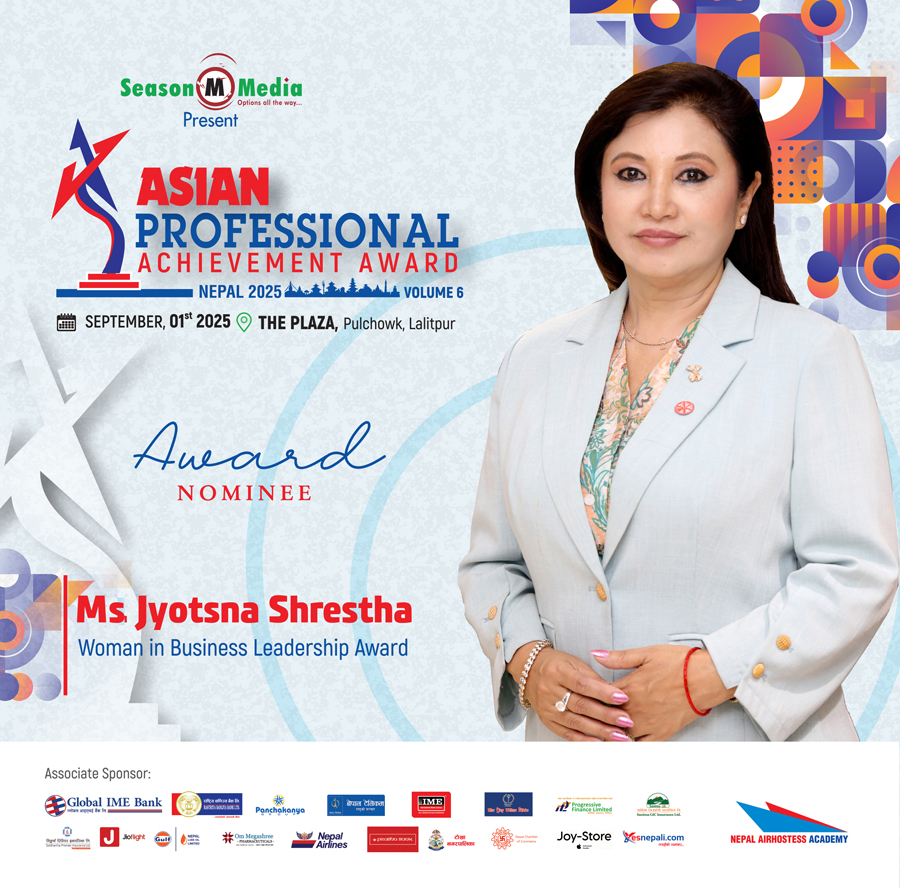
Jyotsna Shrestha’s wide-ranging leadership and policy engagement continue to shape Nepal’s economic trajectory. Her proactive and inclusive approach reflects a strong commitment to reform, resilience, and long-term prosperity for Nepal’s private sector and workforce.

यो खबर पढेर तपाईलाई कस्तो महसुस भयो ?
[WPAC_LIKE_SYSTEM]प्रतिक्रिया
सम्बन्धित खवर