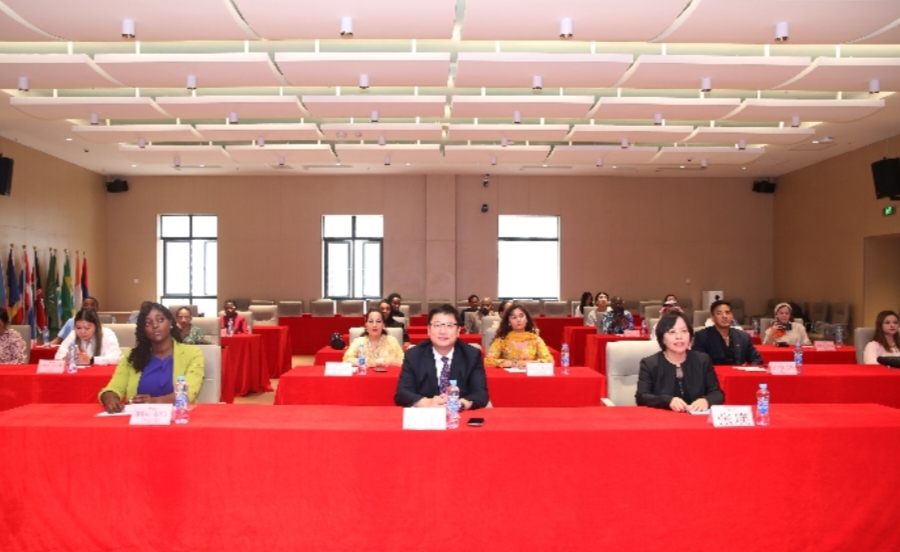
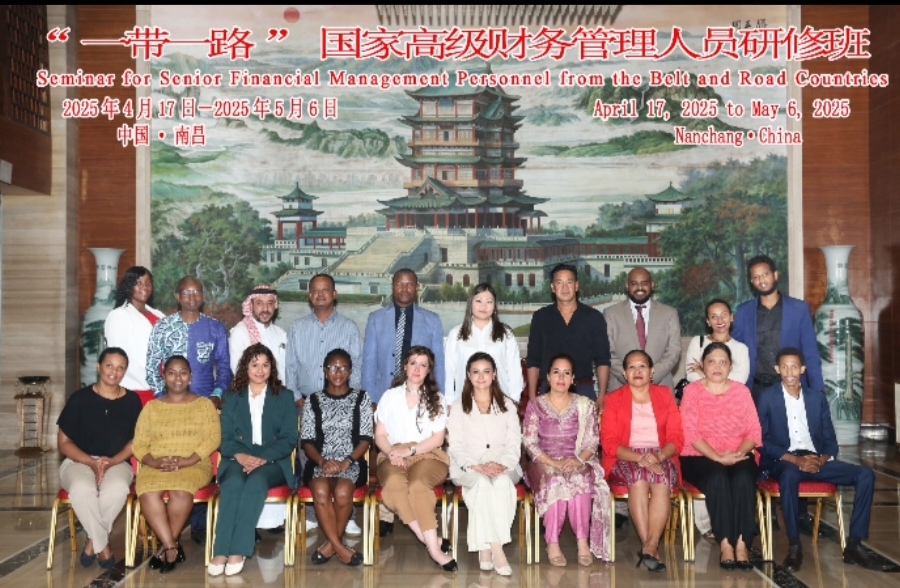
Four professionals from Nepal recently took part in the prestigious “Seminar for Senior Financial Management Personnel from Belt and Road Countries,” held from April 17 to May 6, 2025, in Nanchang, Jiangxi Province. The seminar was organized by the Jiangxi Vocational College of Foreign Studies, sponsored by the Ministry of Commerce of the People’s Republic of China and was hosted primarily in Nanchang City, Jiangxi Province with study visits to Chongqing, Shanghai and Jinggangshan. The seminar provided a holistic perspective on both China’s fiscal evolution and its current practices in financial management.
The Nepali delegation consisted of Ms. Rachhita Aryal, Ms. Kreeti Khatiwada, Ms. Anusha Nepal and Mr. Krishna Shah Thakuri. All four were nominated through the Nepal-China Friendship Forum (NCFF), an organization dedicated to fostering deeper bilateral ties between Nepal and China through people-to-people diplomacy, academic exchange and professional collaboration.
Their participation underscores Nepal’s growing engagement with the Belt and Road Initiative (BRI) an ambitious transcontinental development strategy initiated by China that seeks to enhance regional cooperation, infrastructure development and economic integration across Asia, Europe and Africa. Financial management and capacity building have emerged as critical pillars within the BRI framework and Nepal’s involvement in this seminar marks a key step toward strengthening technical knowledge and regional alignment in this area.
The three-week program brought together dozens of senior financial professionals, policy experts and government officials from a range of BRI partner countries. Through a combination of academic lectures, case studies, field visits and roundtable dialogues, participants were exposed to China’s financial governance architecture, its evolution over the past few decades and the innovative tools it employs to steer national development.
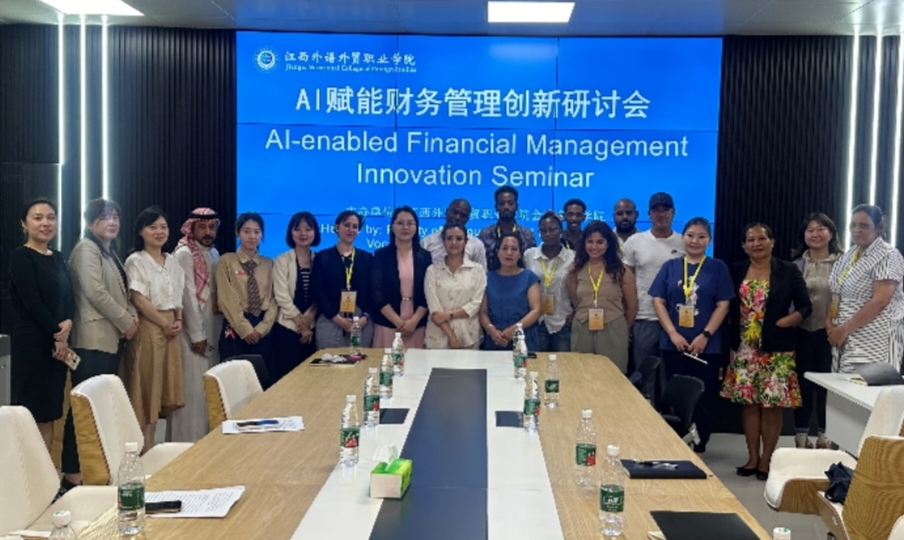
The seminar placed a strong emphasis on fiscal policy design, public financial management, digital finance and tax administration reform. Lectures were delivered by prominent scholars and practitioners. Case studies drew from real life examples of how China has managed to balance economic growth with financial discipline, with special focus on policy driven investment, targeted poverty alleviation and urban infrastructure financing. Delegates also had the unique opportunity to conduct field visits to key financial institutions, special economic zones, training academies and major development projects across four Chinese cities.
In addition to the institutional visits, delegates were exposed to various facets of Chinese culture, technological advancements and educational facilities. Among the key locations visited were Hongcheng Market in Nanchang which offered insights into the city’s open economy and Chongqing Business Vocational College where the cultivation of financial management talent was explored. At Seentao Technology Co. Ltd., Chongqing Branch, participants gained an understanding of accounting education and software applications while a visit to the Chongqing People’s Liberation Monument provided a connection to China’s rich historical heritage. In Shanghai, the group toured Fengyuzhu Culture Technology Co. Ltd. which highlighted corporate financial management practices and the Shanghai Urban Planning Exhibition Center which illustrated the city’s strategic development. Further visits included the Nanchang Yonyou Industrial Park where thematic, aggregated and ecological enterprise cloud service ecosystems were studied. Participants also explored a pharmaceutical company, the Sanwan Reorganization Memorial Hall and the Jinggangshan Red Army Mint Factory to learn about historical minting technology. A visit to Shenshan Village shed light on rural poverty alleviation efforts while the Ahead Software Group at Jinggangshan Digital Economy Park showcased innovative measures in financial management within the digital economy.
For the Nepali participants, these insights were particularly valuable. As Nepal continues its journey of fiscal federalism and grapples with macroeconomic challenges, exposure to global best practices especially from a neighboring country like China offers inspiration and guidance. The seminar allowed the delegates to critically assess which aspects of China’s financial reforms and strategies could be contextualized and adopted within Nepal’s own policy environment.
Speaking on behalf of the Nepali delegation, Ms. Rachhita Aryal reflected on the transformative nature of the program. “It was more than a learning experience. It was an immersion into a different model of governance and strategic thinking. We were deeply impressed by China’s ability to plan long term, integrate financial planning with national goals and adapt rapidly to changing global dynamics,” she said. She further added that the exchange with professionals from other Belt and Road countries enriched the experience even more.
Another unique aspect of the seminar was its cultural component. In addition to the rigorous academic sessions, the program featured guided tours to historical sites, museums and cultural institutions which provided the participants with a glimpse into China’s heritage and development trajectory. These moments of cultural diplomacy helped forge deeper bonds among participants and host institutions which contributed to a broader atmosphere of goodwill and mutual respect.
The Nepal-China Friendship Forum, which supported the nomination for the Nepali team, underscored its dedication to fostering such prospects for young professionals and leaders in the public sector. In a release, NCFF pointed out that such initiatives undertake two activities which is building Nepal’s human capital and at the same time increasing the bilateral relationship with China at the people-to-people level.
“The Forum remarked, “As China keeps creating avenues for BRI knowledge disseminating, Nepal needs to redeem and utilize these prospects.” Such interactions, in addition to benefiting the participants, help bring new ideas and practices into Nepal’s institutional framework.”
The delegates are looking forward to using the insights gained from the seminar in the ongoing work on financial policy, development planning, institutional reform in Nepal and expressed appreciation to the Chinese government for providing the international cooperation, capacity building and shared development for setting up a platform that fosters such collaboration.
As the global economies are becoming increasingly interdependent, these regions have peers from different parts of the globe with whom they can learn, adapt, and innovate. In a world trying to tackle intricate financial challenges, the Belt and Road Financial Management Seminar offers tremendous value as it provides other countries like Nepal with the enabling tools to collaborate.
(Ms. Rachhita Aryal is the Program Coordinator at the Nepal-China Friendship Forum.)
By Rachhita Aryal
यो खबर पढेर तपाईलाई कस्तो महसुस भयो ?
[WPAC_LIKE_SYSTEM]प्रतिक्रिया
सम्बन्धित खवर