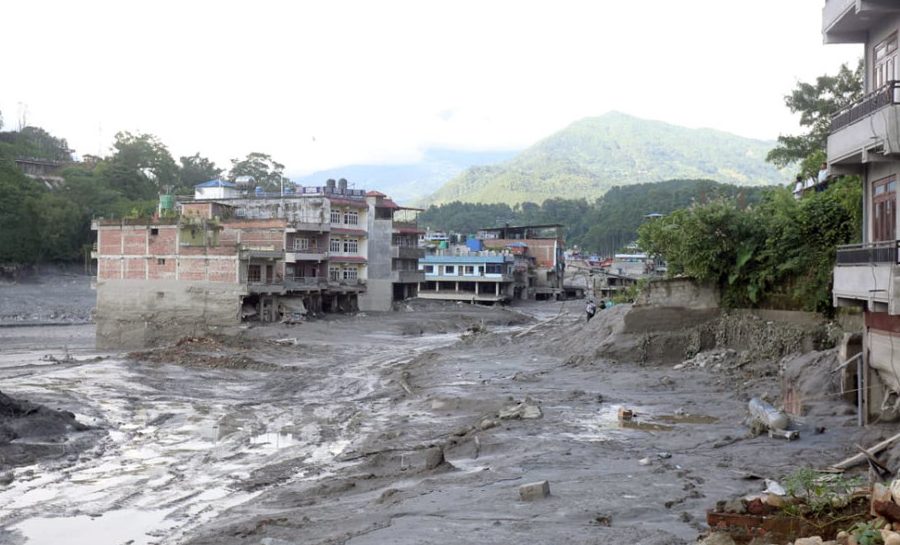
Rezina Tuladhar, In July 2025, the Bhotekoshi River flooded after a lake burst in Tibet. The flood destroyed the Miteri Bridge, which is important for trade between Nepal and China. It also damaged many hydropower projects, including the big Rasuwagadhi Hydropower Plant. Several people died, and many are still missing. Families living nearby lost their homes, jobs, and access to roads and electricity.
This flood was just one of many disasters Nepal has faced recently. In the past few months, there have been many floods, landslides, lightning strikes, and fires. These events have hurt hundreds of people and left thousands without shelter. Experts say these disasters are getting worse because of climate change.
Nepal’s buildings, bridges, and roads are not strong enough to handle such extreme weather. Many were built with old designs and weak materials. They break easily when heavy rain or floods hit. The Miteri Bridge and the Syaphrubesi–Rasuwagadhi road were destroyed, showing how fragile Nepal’s infrastructure can be.
To protect the country, Nepal needs to make big changes. It must build stronger roads and bridges that can last during floods and landslides. Watching rivers and lakes closely can help warn people early and save lives. Families living in high-risk areas should be moved to safer places. Nepal should also work with nearby countries like China to share weather information so disasters can be predicted early.
The Bhotekoshi flood shows that Nepal must prepare better. Climate change is making disasters more frequent and dangerous. It is time to build wisely, plan smartly, and protect people before the next disaster hits.


यो खबर पढेर तपाईलाई कस्तो महसुस भयो ?
[WPAC_LIKE_SYSTEM]प्रतिक्रिया
सम्बन्धित खवर