Written By: Rezina Tuladhar
Today, mental health issues are evident in both young people and the elderly, but the factors contributing to their struggles vary. While younger generations face challenges from digital overload and social pressure, older adults often contend with loneliness and emotional neglect. Recognizing these differences allows us to respond with empathy rather than judgment.
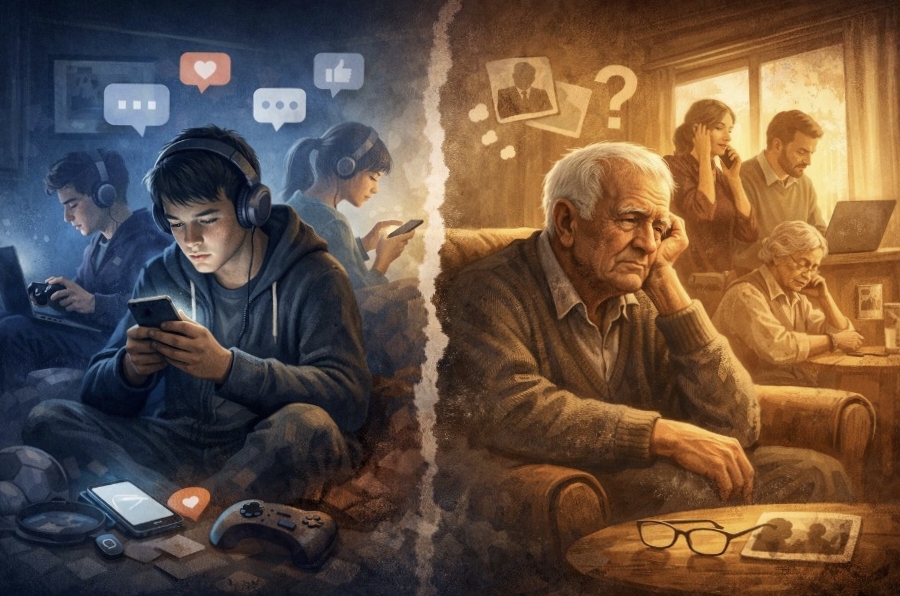
For younger individuals, particularly those in Gen Z and Gen Alpha, life is heavily intertwined with screens. Mobile phones, laptops, and video games have largely replaced outdoor activities and face-to-face social interactions that previous generations enjoyed. Although technology offers knowledge and convenience, excessive use can diminish emotional connections and hinder real-life communication skills. Many young people spend countless hours online, which can restrict their ability to deeply understand or openly express emotions.
Social media has also fostered a culture of comparison. Young people are constantly exposed to edited and “perfect” portrayals of others’ lives. This can contribute to low self-esteem, anxiety, and feelings of inadequacy. Added pressures from academics, career competition, and the need to prove themselves at an early age further exacerbate stress levels. At times when young people seem overly confident or believe they are always right, it may not stem from arrogance but rather serve as a defense mechanism against their insecurities.
Emotional disconnection is another significant issue. Many families lead busy lives, resulting in fewer meaningful conversations. Without guidance or emotional support, young individuals may silently struggle. When emotions go unrecognized or unexpressed, issues such as depression, anxiety, mood swings, and even anger can develop.
Conversely, mental health challenges in older age tend to manifest differently. After reaching 60 years old, many experience physical health issues alongside gradual memory decline. Forgetting names or daily tasks can lead to increased frustration and fear. In some instances, this may be linked to cognitive decline related to aging or depression. Irritability among elderly individuals is frequently misunderstood; it may arise from feelings of being unheard, dependent on others, or emotionally isolated.
Loneliness significantly contributes to depression among older adults. As family members become preoccupied with work and technology, elders often receive less emotional attention. Retirement can also result in a loss of identity and purpose; when someone who once had responsibilities suddenly feels less needed, sadness may quietly take hold. They might not explicitly express their depression; instead, their distress could manifest as anger, complaints, or withdrawal.
Despite the differences between generations, the root issue is often the same—lack of emotional connection. Young people need guidance, listening, and balanced use of technology. Older adults need respect, attention, and meaningful interaction. Both age groups require empathy, patience, and understanding.
Mental illness in youth often grows from overstimulation and pressure, while depression in old age often grows from loneliness and neglect. Bridging this emotional gap within families and society can create healthier minds at every stage of life.


यो खबर पढेर तपाईलाई कस्तो महसुस भयो ?
[WPAC_LIKE_SYSTEM]प्रतिक्रिया
सम्बन्धित खवर